Sustainability
Discover how Changkat Primary nurtures eco-stewards through hands-on farming, green campus spaces, and community partnerships.
Changkat Primary School Sustainability Framework
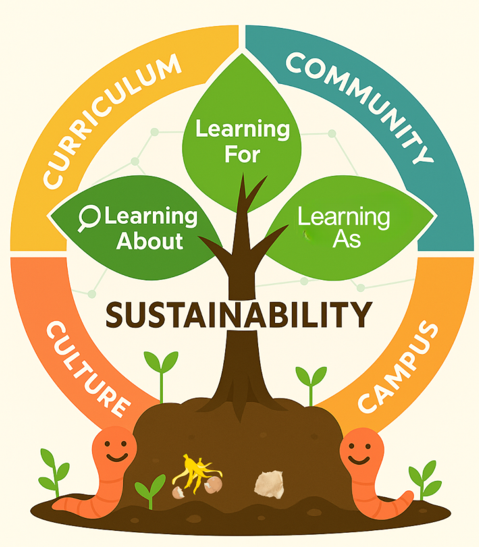
At Changkat Primary, sustainability is a way of life. Guided by MOE’s Eco Stewardship Programme, our GoGreen Plan nurtures students to become environmentally responsible citizens. Our framework connects Curriculum, Campus, Culture, and Community (4Cs) with three dimensions of learning: Learning About, Learning For, and Learning As sustainability.
And at the Heart: The Whole-School Ecosystem Logo
And at the Heart: The Whole-School Ecosystem
The tree is held upright by four strong winds—Curriculum, Culture, Campus, and Community:
• Curriculum: Rooted in real-world issues, spiraled across levels, powered by coding, Science, and critical thinking.
• Culture: A shared belief system nurtured through student leadership, green ambassadors, and teacher role-modelling.
• Campus: A living lab—from soil to sprouts to solar—transforming spaces into learning zones (EcoHub, wormeries, vertical gardens).
• Community: We’ve bridged with NEA, PUB, NParks, ITE East, and the SECDC to co-create learning beyond walls.
Curriculum – Learning About Sustainability
Learning Through Experience
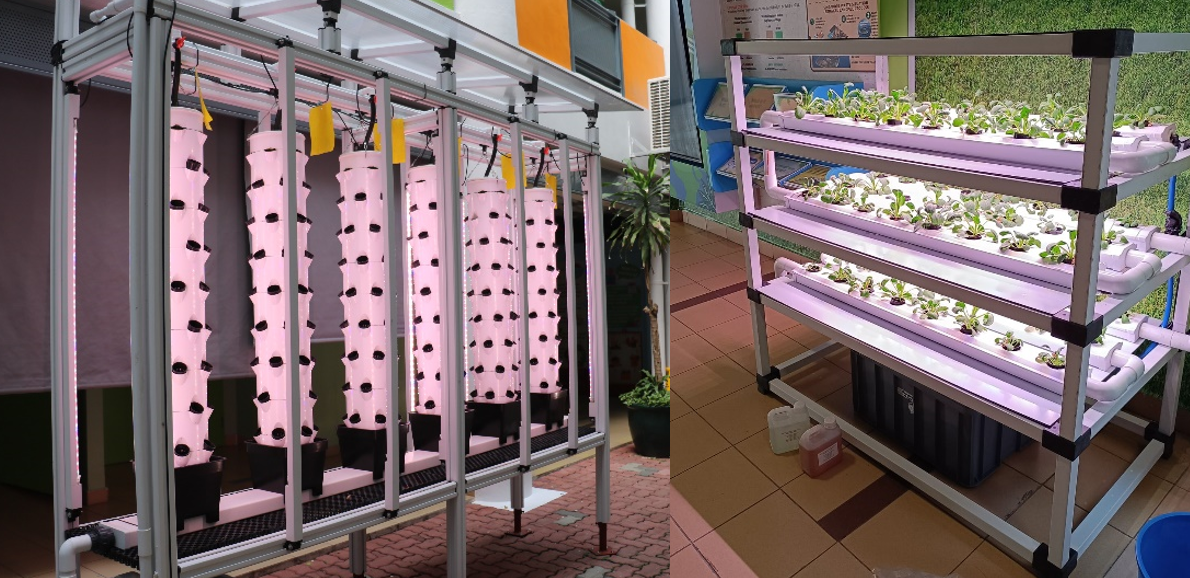
Our students don’t just read about sustainability — they live it. In the Farm-to-Table Programme, Primary 5 students get their hands dirty (and sometimes wet!) as they try out three different types of farming:
Hydroponics – growing vegetables without soil.
Aquaponics – combining fish and plants in a natural cycle.
Conventional farming – planting and harvesting the traditional way.
Alongside, our Applied Learning Programme weaves in coding and project work, helping students explore real-world environmental issues in creative ways.
Campus – Learning As Sustainability
A Living Classroom
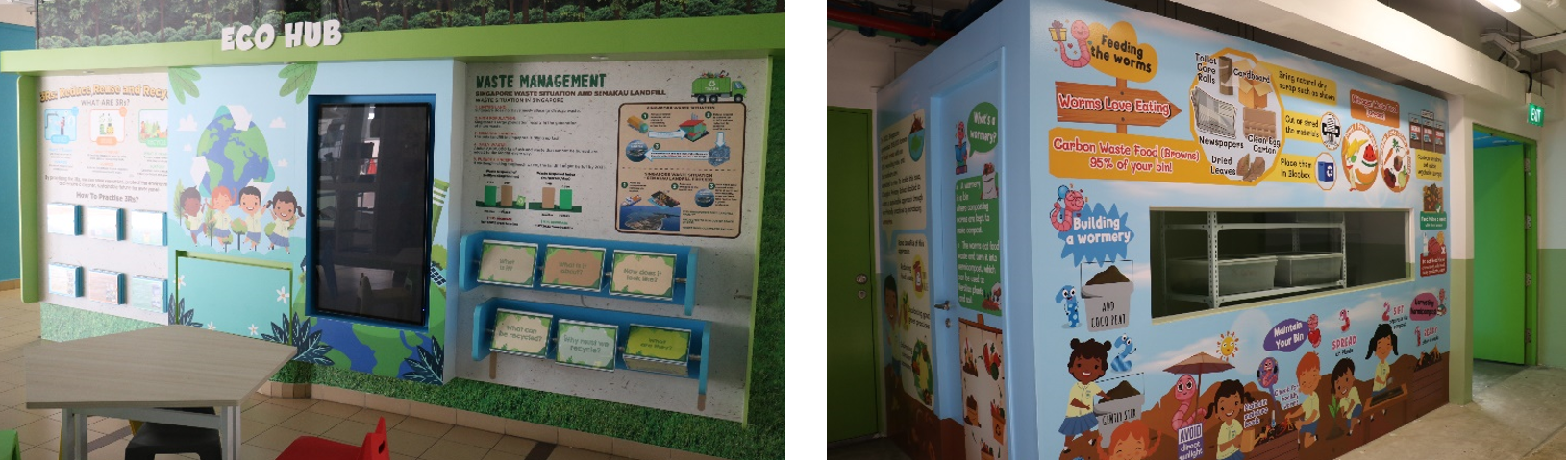
Our school is itself a teaching tool. The EcoHub is where students see sustainability in action — from energy-saving ideas to upcycled creations. In the wormery, they learn how even food scraps can be turned into valuable fertiliser. Our Butterfly Trail and Science Garden give them a chance to explore biodiversity right on campus.
Building Habits That Last
From recycling bins in every class to the Clean Plate Campaign in the canteen, our students practice small, daily actions that add up to big impact. At every level, they take part in activities like upcycling projects, recycling drives, and social enterprise days, learning that caring for the Earth is part of caring for each other.
Community – Extending Sustainability Beyond School
Sharing With the Community
Sustainability doesn’t stop at our school gate. Through the SustainaTrail@Changkat–Simei, we welcome the community and partner schools to join us in celebrating Earth Day and Go Green SG. Our students also connect with national partners like NEA, PUB, and the Science Centre, gaining insights into Singapore’s efforts to build a greener future.
Overview of our Programme
Primary 3
Sustainability Focus (SG Green Plan 2030)
Reduction (Circular Economy)
Objectives
Understand the 4Rs: Refuse, Reduce, Reuse, Recycle.
Instill responsible waste habits.
Apply eco-friendly cleaning practices.
Main Activities / Highlights (Experience/ Knowledge)
Ecoenzyme Making & Use: Students make ecoenzyme and clean canteen tables.
Waste Audit & Upcycling: Students track classroom waste and create upcycled crafts.
School-wide Recycling Drive: Encourage proper waste disposal.
Primary 4
Sustainability Focus (SG Green Plan 2030)
Energy & Water Conservation (Sustainable Living, Resilient Future)
Objectives
Learn about water and energy sustainability. Develop habits to conserve resources.
Explore applications of sustainable technology.
Main Activities / Highlights (Experience/ Knowledge)
Rainwater Harvesting System: Hands-on project in the school’s Environment Hub.
Energy-saving Challenge: Students track and reduce classroom energy usage.
Solar Panel Awareness: Introduction to solar-powered systems in the hub.
Primary 5
Sustainability Focus (SG Green Plan 2030)
Food Sustainability & Urban Farming
Objectives
Understand sustainable food sources.
Engage in food production and waste management.
Apply STEM skills to sustainability.
Main Activities / Highlights (Experience/ Knowledge)
Farm to Table Programme: Students grow vegetables using a combination of urban farming, hydroponics, and aquaponics.
Wormery & Composting: Students manage food waste through vermicomposting.
Mathematics & Sustainability: Using the Eco-Mart for real-life financial literacy applications.
Primary 6
Sustainability Focus (SG Green Plan 2030)
Sustainable Living (Circular economy – transforming waste to treasure)
Objectives
Apply multi-disciplinary skills in the making of game/retail/experience booth in the fund-raising VIA project, while promoting sustainable practices.
Main Activities / Highlights (Experience/ Knowledge)
P6 Social Enterprise Day
Students to advocate for sustainable practices for the fund-raising activity.
Our Commitment
By learning, practicing, and sharing sustainability, our students grow into eco-stewards who are passionate, responsible, and ready to make a difference. At Changkat Primary, we are growing a greener tomorrow — one child at a time.